Guide
Responsible gambling in Sweden: help, limits and self-exclusion
Responsible gambling in Sweden: Stödlinjen on 020‑81 91 00, what Spelpaus does not cover, blocking tools, treatment, debt advice and support for relatives.
 By Casinoutanlicens redaktion
 Fact-checked by Ingvar Mikaelsson
- Updated
- 7 min read
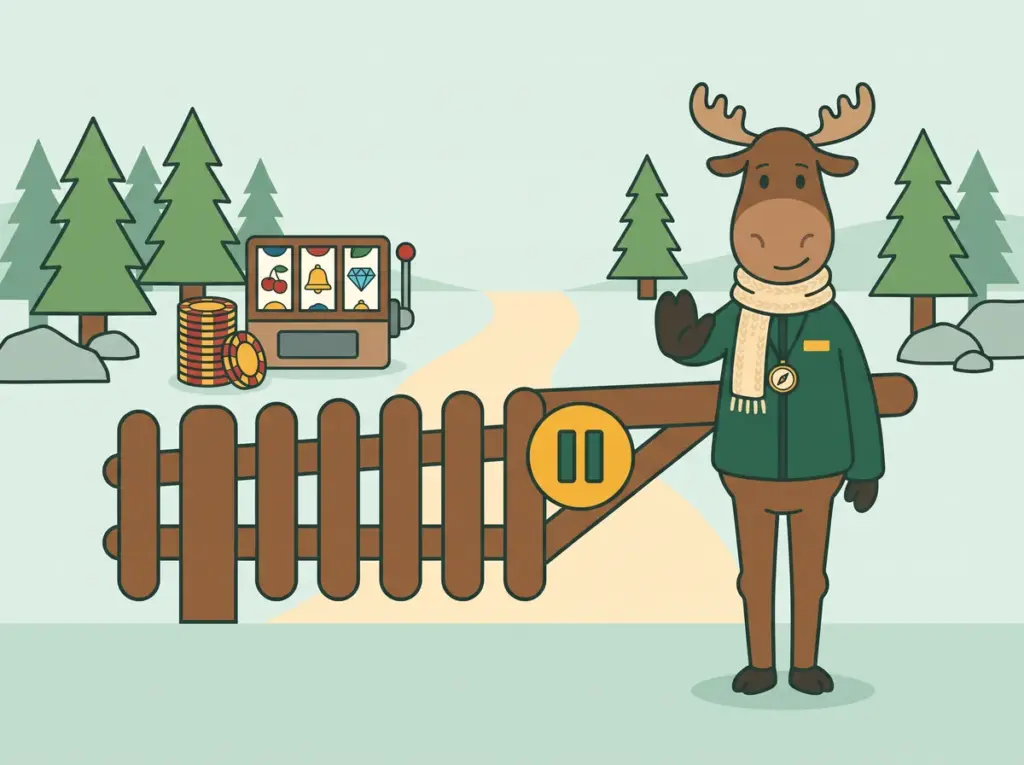
Responsible gambling means gambling stays entertainment you control: you decide in advance how much money and time to spend, and you stop when you reach that limit. If you need to talk to someone now, call Stödlinjen, the Swedish gambling helpline, on 020‑81 91 00 or use the chat at stodlinjen.se. It is free, you do not have to say who you are, and the people who answer have a duty of confidentiality.
18+. Gambling for money can lead to addiction. Stödlinjen, the Swedish gambling helpline, answers on 020‑81 91 00, free and anonymous.
Stödlinjen helps both gamblers and the people close to them. This page is written for anyone living in Sweden who prefers to read in English. It covers the limits of Swedish protection at casinos without a Swedish licence, what gambling addiction is, where to find care and help with debts, and what you can do as a relative.
Quick facts
| Stödlinjen | 020‑81 91 00, free and anonymous, plus chat. Open on weekdays excluding public holidays: Mon 09:00 to 19:00, Tue and Wed 09:00 to 17:00, Thu 11:00 to 19:00, Fri 09:00 to 15:00 |
|---|---|
| Spelpaus | The national self-exclusion register at spelpaus.se. Applies only to companies with a Swedish licence |
| Age limit | 18 |
| Blocking software | Gamban, BetBlocker (free) |
| Care and advice | Call 1177 for healthcare advice around the clock, or contact a vårdcentral (local health centre) or addiction clinic |
| Gambling debts | Budget and debt advice from your municipality, free and confidential |
Spelpaus does not protect you at unlicensed sites
Spelpaus lets you exclude yourself from gambling for 10 days, 1 month, 3 months, 6 months or until further notice (at least 12 months). An exclusion cannot be cancelled early. Just under 138,000 people were registered in the second quarter of 2026.
The gap is simple: Spelpaus only covers companies with a Swedish licence. Casinos without one, including the foreign casinos, Curaçao casinos and MGA casinos we write about, are not connected and do not check the register. A foreign casino may therefore still let you play after you have excluded yourself.
If you have taken a Spelpaus break, that is a strong reason not to look for casinos without a licence at all, and to add the blocks described below.
What changes without a Swedish licence
| Swedish licence | No Swedish licence | |
|---|---|---|
| Spelpaus | Applies | Does not apply |
| Deposit limit | You must set one before you can play | Depends on the casino |
| Supervision | Spelinspektionen, the Swedish gambling regulator | A foreign authority, if any |
| Tax on winnings | Tax free | Often taxable, see tax on casino winnings |
| Duty of care | Chapter 14, section 1 of the Gambling Act | No Swedish duty of care |
Companies with a Swedish licence must protect players against excessive gambling, including by monitoring how they play. You may also read about a fixed limit of SEK 5,000 a week for casino games. That applied only from 2 July 2020 to 14 November 2021.
What gambling addiction is
Gambling addiction, also called gambling disorder, means you have lost control over gambling for money. It damages relationships, work or finances, and attempts to stop fail. Gambling to win back losses is common, as is borrowing money or using money meant for something else. According to Swelogs 2021, a population study by Folkhälsomyndigheten (the Public Health Agency of Sweden), just over 4 percent of people aged 16 to 84 have some form of gambling problem.
Healthcare assesses addiction against nine criteria, and four or more meet the diagnosis. You can have a problem with fewer. The risk is higher with games where little time passes between stake and result: 1177 counts slot machines, casino games and online poker among these, which are the games at the casinos we write about. Alcohol or drugs while gambling also raise the risk.
Warning signs include:
- You gamble with money meant for bills or food.
- You raise your stakes to win back losses.
- You get restless or irritable when you cannot gamble.
- You hide how much you gamble from the people close to you.
- You borrow money or sell things in order to gamble.
Gambling problems often affect mental health, with worry, stress or low mood, and some people have thoughts of taking their own life. Treatment works, so seek help if you recognise yourself here.
Test your gambling habits
The usual measure in Sweden is PGSI (Problem Gambling Severity Index), nine questions about the last three months. Each answer scores 0 for never, 1 for sometimes, 2 for often and 3 for almost always, up to a maximum of 27. Stödlinjen offers a free, anonymous test with the same questions. The result is an estimate, not a diagnosis.
| Score | Meaning according to Folkhälsomyndigheten |
|---|---|
| 0 | No gambling problems |
| 1 to 2 | Some risk of gambling problems |
| 3 to 7 | Elevated risk of gambling problems |
| 8 or more | Gambling problems |
Blocks you can set up yourself
- Limits and breaks in your account, set before you start playing.
- Self-exclusion at the casino, and close the account if you want to stop.
- Blocking software such as Gamban or the free BetBlocker blocks gambling sites on phone and computer, including foreign ones.
- A block at your bank. Some banks can help block certain types of purchase, and Revolut has a gambling block in its app. Ask your bank what it offers.
- Remove saved cards and crypto wallets from gambling accounts.
Blocks make gambling harder. 1177 also describes changes to your habits:
- Take a break from gambling and make it harder to restart, with Spelpaus and blocking software.
- Keep a gambling diary of when you played, what triggered it, how much and how you felt.
- Limit your access to money, for example by handing your finances to someone close for a while.
- Set realistic goals, starting with the next week or month.
- Find other things to do and talk to someone when the urge comes.
Where to get treatment
Gambling addiction can be treated, and you have the right to support and treatment from both your municipality and your region. Municipal support is free, while regional healthcare charges a patient fee up to the high-cost ceiling. The recommended treatment is cognitive behavioural therapy (KBT in Swedish), sometimes with motivational interviewing.
- Stödlinjen helps you find a next step and tells you what support exists where you live.
- A vårdcentral or addiction clinic. You can choose any one in the country. Call 1177 for advice on where to go.
- Socialtjänsten, your municipality’s social services, offers support and treatment. You generally apply in the municipality where you are folkbokförd, meaning registered as a resident.
- Online treatment. Beroendecentrum Stockholm runs Spelprogrammet, online KBT over 12 to 16 weeks. You can register through 1177 if you are over 18 and live in Sweden.
- Support groups. Spelberoendes Riksförbund, Spelberoendegruppen and Anonyma spelare (Gamblers Anonymous) have free groups in several places and online.
If it is urgent: if you have thoughts of taking your own life, or feel so bad you cannot go on, contact a psychiatric outpatient clinic or emergency department directly. If life is in immediate danger, call 112.
Gambling debts
Debts can last long after the gambling stops. In a 2020 survey by Kronofogden, the Swedish Enforcement Authority, 10 percent of people who had applied for debt relief reported gambling problems, according to Folkhälsomyndigheten.
- Pay the essentials first. Rent, electricity and food come first, then home insurance and medicine.
- Contact budget and debt advice. Every municipality must offer it by law. It is free and confidential, and an adviser can help you get an overview, negotiate and apply for debt relief.
- Do not borrow to pay debts, and do not try to win the money back.
- Apply for debt relief (skuldsanering) if the debts are too large. Kronofogden investigates and decides. It runs for five years, and you get a payment remark when it starts.
If someone close to you gambles
It is never your fault that another person gambles. You are not responsible for them, but you are responsible for your own wellbeing and that of any children. You are not alone: about 11 percent of people aged 16 to 84, around 915,000 people, have someone close to them who has or has had gambling problems (Swelogs 2021).
- Talk when things are calm. Say how you feel, listen and ask questions.
- Protect your own finances first. Never lend money or pay someone else’s gambling debts. If you want to help, pay a bill directly or buy food.
- Set boundaries. Never accept threats or abuse, physical or psychological.
- Get support for yourself. Stödlinjen takes calls from relatives, and most support groups welcome them.
If there are children in the family, social services can often help, including with special support for children.
Frequently asked questions about responsible gambling
Does Spelpaus apply at casinos without a Swedish licence?
No. Spelpaus applies only to companies with a Swedish licence. Foreign casinos without one do not check the register, so use blocking software and a bank block as well.
What is the number for Stödlinjen?
020‑81 91 00. It is free and anonymous, and there is also a chat at stodlinjen.se.
Can I end a Spelpaus exclusion early?
No. An exclusion through Spelpaus lasts the whole period you chose: 10 days, 1 month, 3 months, 6 months or until further notice (at least 12 months).
Is there still a deposit limit of SEK 5,000 a week?
No. It applied only between 2 July 2020 and 14 November 2021. Today you must set a deposit limit yourself before you can play with a licensed company.
Is there free help for gambling debts in Sweden?
Yes. Every municipality must offer budget and debt advice by law. It is free and confidential, and an adviser can help you make a budget, negotiate with creditors and apply for debt relief.
Redaktionen på Casinoutanlicens.com står för sajtens policysidor: om oss, kontakt, redaktionell policy, betygsmetod, ansvarsfullt spelande och integritetspolicy.
Sources
- Stödlinjen: 020-81 91 00
- Spelpaus.se: self-exclusion from gambling
- Spelinspektionen: Spelpaus
- Skatteverket: Vinster i spel och tävlingar
- Gamban: program som blockerar spelsajter
- BetBlocker: gratis blockering av spelsajter
- 1177: gambling addiction (hasardspelsyndrom)
- Stödlinjen: support and treatment
- Stödlinjen: test your gambling habits (PGSI)
- Stödlinjen: being close to someone who gambles
- Folkhälsomyndigheten: statistics on gambling and gambling problems (Swelogs 2021)
- Folkhälsomyndigheten: relatives and gambling
- Folkhälsomyndigheten: finances and gambling problems
- Folkhälsomyndigheten: PGSI score levels, Swelogs 2018 tables
- Beroendecentrum Stockholm: Spelprogrammet, online treatment
- Konsumentverket: budget and debt advice from your municipality
- Kronofogden: debt relief, how it works
- Riksdagen: Gambling Act (2018:1138), chapter 14, section 1 on duty of care